

Okinawa ISLANDBLUE, a rice whisky crafted by Kumesen Shuzo, known for its awamori Kumesen.
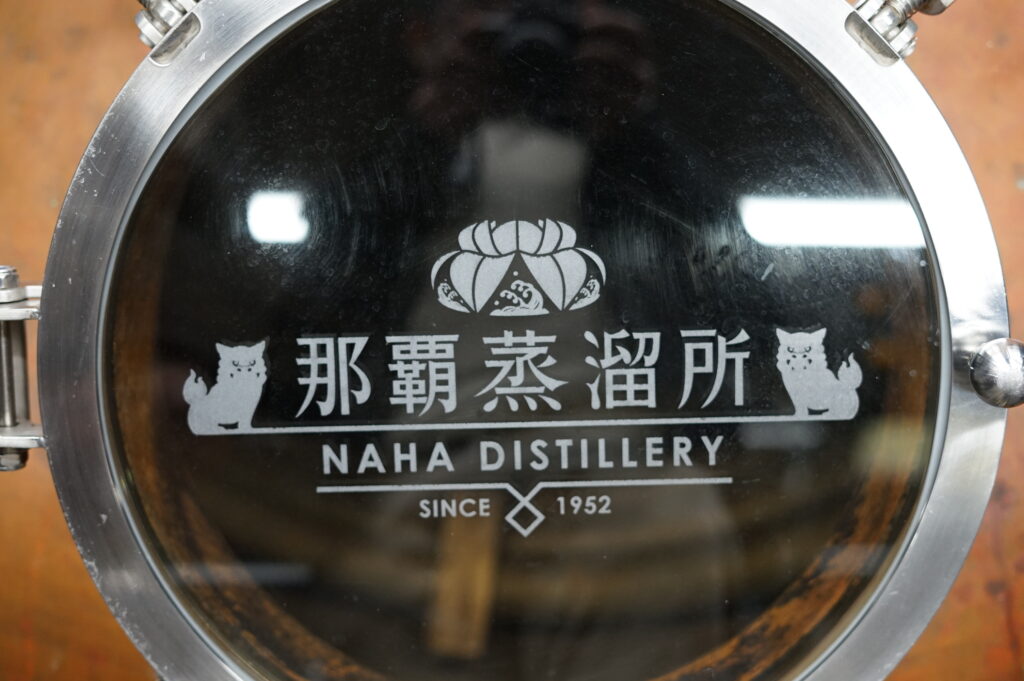
Based on the tour of the ‘Naha Distillery’, this report details the current state of the company’s whisky production.
Amidst the slump in awamori, the traditional spirit they’ve kept making
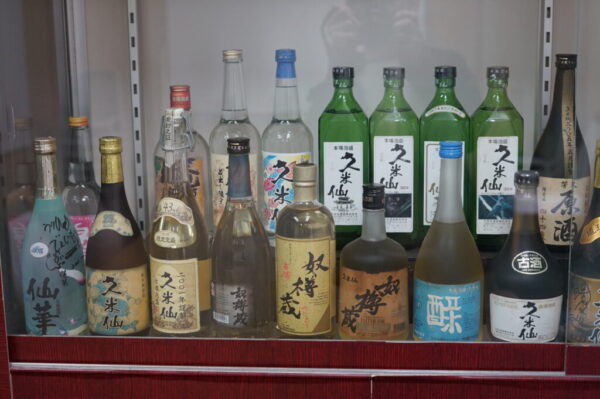
Kumesen is synonymous with awamori. Many people outside Okinawa Prefecture are likely familiar with the brand.
However, the current reality in Japan is that demand is declining for both shochu distilleries and awamori breweries.
“We failed to cultivate drinkers,” says Mr. Matsumura, the factory manager of Kumesen Shuzo’s production department.
While they had long pursued challenges like barrel-aged awamori, the awamori produced as kusu (aged awamori) saw sales decline.


The Challenge of whisky Making: The Turning Point
The background to our current whisky production stems from a time when awamori sales were sluggish. While exploring ways to repurpose and boost sales, we created a “whisky-like liqueur” using awamori as a base. This led to a purchase offer from the United States.
In the U.S., while bourbon has strict regulations, the overall definition of whisky is relatively loose.
Consequently, Kumesen’s base spirit came to be sold as “whisky” within the United States.
Using this concept, the awamori was redistilled to produce grain spirits, which were then aged. At bottling, over 10% malt whisky was blended in, giving birth to “Okinawa ISLANDBLUE”.
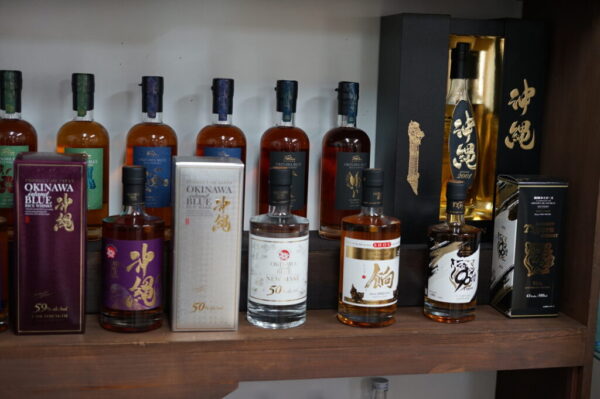 While the main products are three types, they also handle many limited editions. [ /caption]

Raw Materials & Distillation Equipment
The primary raw material is Thai rice used for awamori production, though they also manufacture malt whisky.
Regarding rice handling, it’s impressive how the expertise cultivated over many years of awamori production is directly applied here.
Initially, Pinnacle M yeast was used for fermentation, but currently, multiple yeasts are employed to broaden the range of product characteristics.
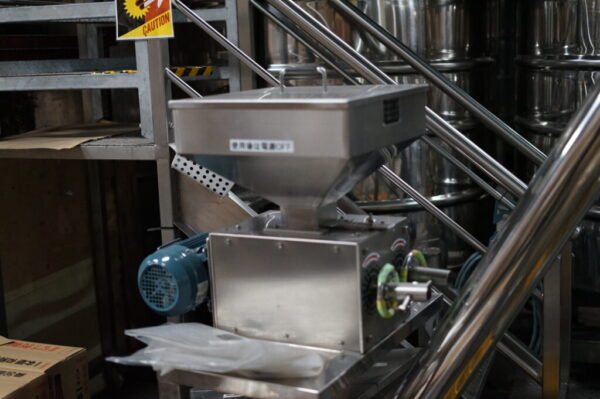
Rice mill [caption id="attachment_54040" align="alignright" width="318"]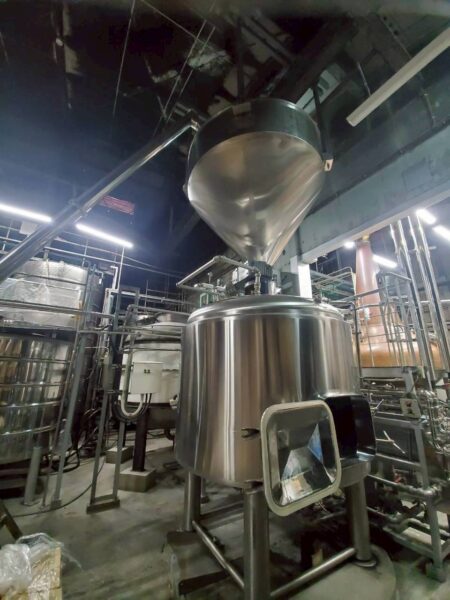 Mash tun
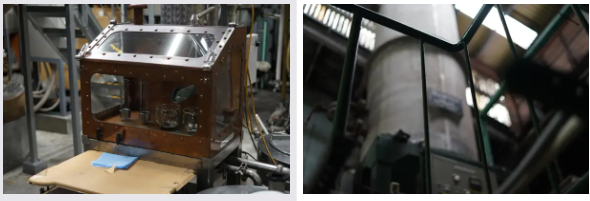
Spirit Safe and Vacuum Distiller
The distillation equipment is Chinese-made, and the copper pot stills are also from the same company.
Batches are made at 400kg each. Distillation occurs four times per week, using the same still for both the first and second distillations. No cooling equipment is installed, so distillation is suspended during summer months. This is because high temperatures cause the spirit to become excessively heavy.
|
|
|
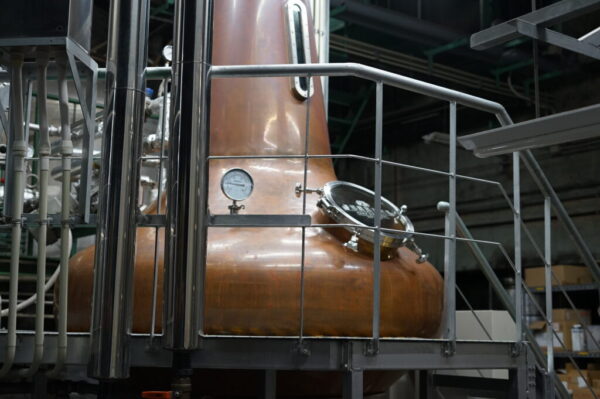
Regarding the production of whisky base spirit, we have also produced the first distillation using vacuum distillation in a stainless steel still.
Although not copper, vacuum distillation effectively removes off-flavors, making it a rational choice extending from awamori production.
It’s said that in the past, awamori was sometimes barrel-aged at around 40% ABV, but at that strength, little barrel-derived maturation character was achieved.
Nowadays, by barrel-aging the re-distilled awamori base spirit, it is possible to achieve a more distinct expression of maturation.
Tropical Aging Trial
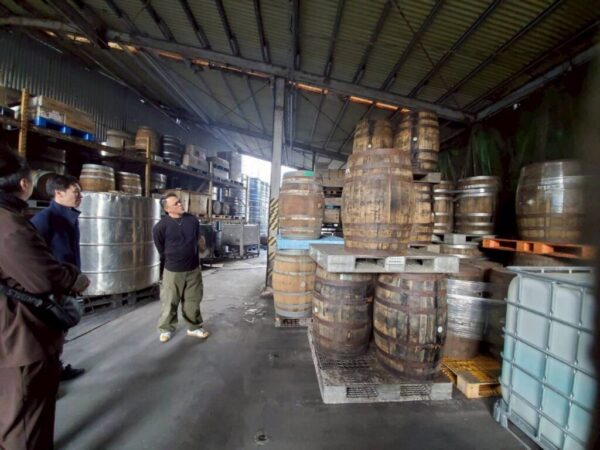
The barrels used for aging include a wide variety: bourbon barrels, sherry barrels, Spanish oak barrels, STR barrels, and awamori barrels.
Among the casks for awamori aging are some purchased directly in the United States by the previous owner 40 years ago. The distillery currently owns approximately 1,000 casks.
During the tour, barrels were seen aging outdoors in a vertical position.
Okinawa’s climate can be considered extremely harsh for aging.
The angel’s share exceeds 10% annually, and under windless conditions during warehouse aging, it can reach nearly 15 %.
Placing barrels outdoors deliberately is part of an experiment in aging under harsher conditions. The plan is to fully leverage the characteristics of awamori barrels for whisky production going forward.
Currently, they also perform the process of transferring aged base spirits between barrels, carefully selecting barrels based on color, aroma, and the characteristics of the base spirit.
Summary
The brewery fully understood that products like Okinawa Island Blue and rice whisky using germinated brown rice instead of malted barley fall outside the “definition of Japanese whisky. “
Nevertheless, Kumezen Shuzo aims to create “whisky that only we can make,” utilizing the techniques and ideas cultivated through awamori production and harnessing Okinawa’s unique environment.
They have already produced and commercialized products using Japonica rice plus germinated brown rice, such as the Oita Prefecture rice and whisky “Wakoku” and the rice whisky “Shonan Harumi.”
The current goal is to realize a rice whisky using locally grown Japonica rice. By clearly defining the terroir,
and shaping “a whisky that can only be born in Okinawa”.